Home / Clinical Trials

Clinical trials at PASO

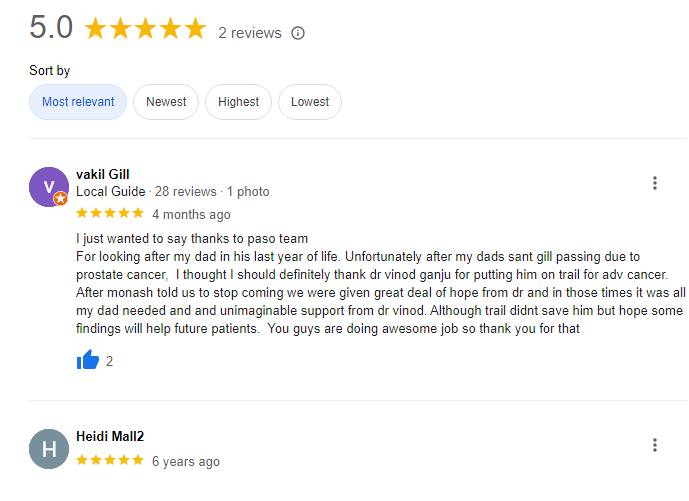
A purpose-built trials space and an on-site team working with patients who want to take part: molecular profiling, targeted therapies, immunotherapies and cancer vaccines. Trials can give early access to therapies not yet publicly available.

Clinical trials research

Why PASO Medical?

Qualified staff

Experienced research staff trained in ICH-GCP to protect participants’ rights, integrity and confidentiality.

Patient coordination

We liaise with you and your doctors and schedule imaging, blood tests and ECGs.

Access

Treatments not yet available to the general public.

Current knowledge

Our team tracks trials worldwide to offer suitable options as an additional treatment choice.

Regulatory expertise

Most trials are set up within 12 weeks.

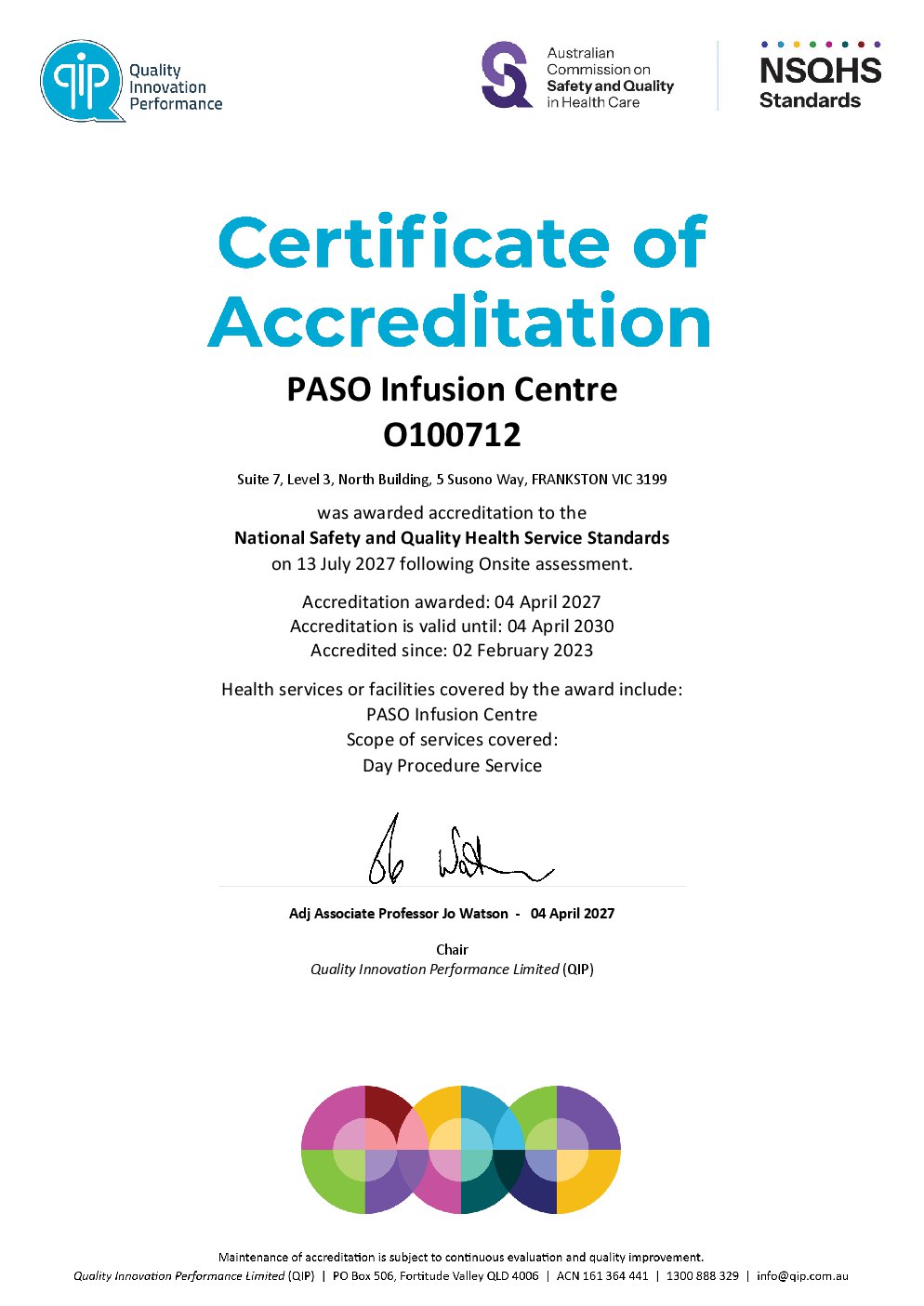
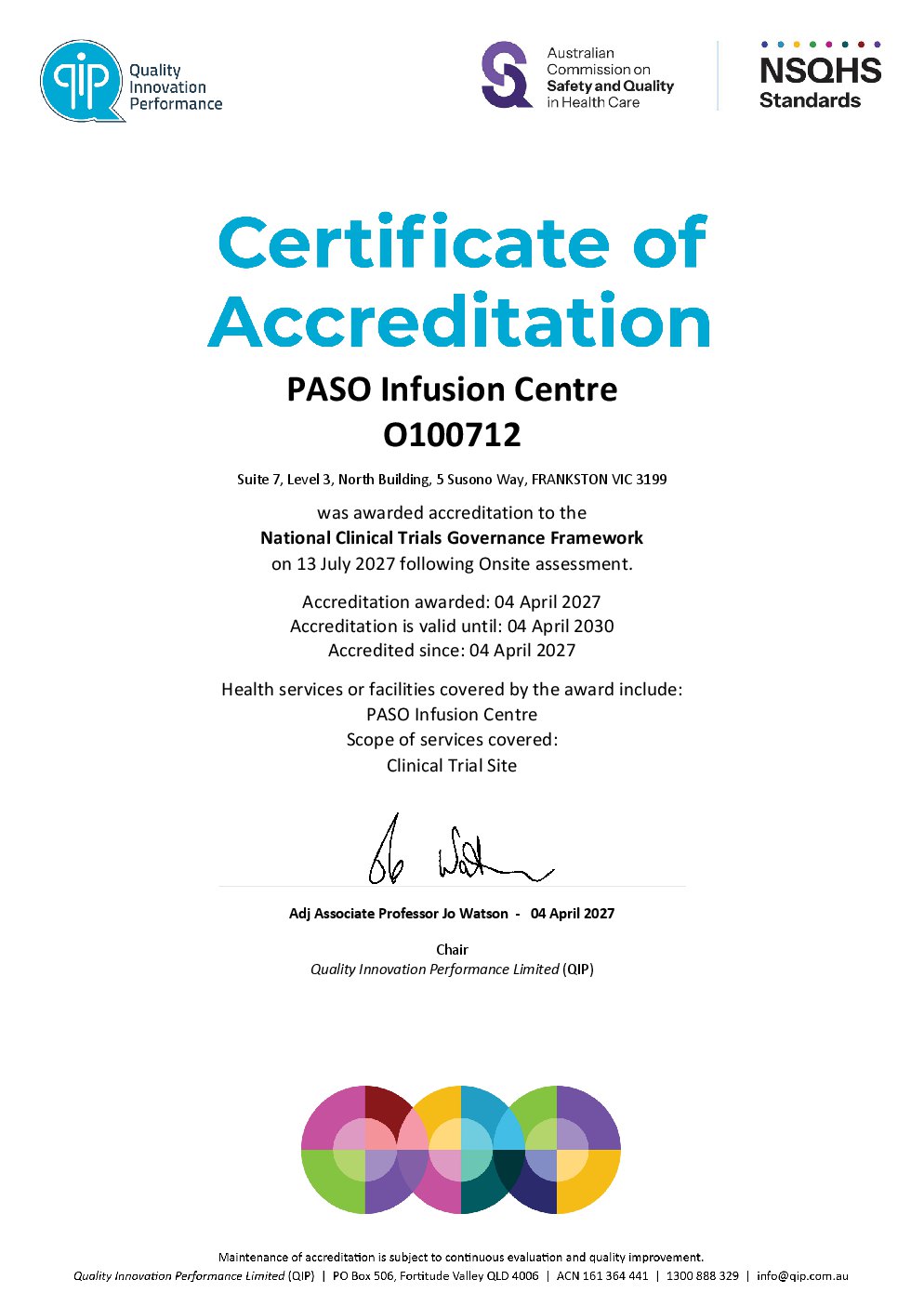
Good Clinical Practice

High standards in trial design, conduct, monitoring, auditing and reporting.

Clinical Trials Unit

Supporting academic and commercial research in breast, lung, prostate, colorectal and gastro-oesophageal cancers, and in haematological cancers including lymphoma and multiple myeloma.

Our purpose

To let patients contribute to research while receiving up-to-date care, and to be a cancer centre of excellence.

Interested in one of our clinical trials?

Clinical trials can provide access to new and emerging treatments for some patients. If you are interested in learning more about a trial offered through PASO Medical, please speak with your treating oncologist or haematologist. They can advise whether a study may be appropriate for you and arrange a referral if suitable.

Clinical trials have specific eligibility requirements, and our research team will review each referral to determine suitability for a study.

See current trials →

Frequently asked questions

A research study in which volunteers receive investigational treatments under the supervision of their doctor and a research team. Treatments are developed by pharmaceutical and biotech companies, who select investigators to run the studies.

All clinical trials have guidelines about who can participate. Before joining a clinical trial, a volunteer must qualify for the study. The factors that allow volunteers to participate are called “inclusion criteria” and the factors that disallow volunteers from participating are called “exclusion criteria.” These criteria can include age, gender, the type and stage of a disease, previous treatment history, and other medical conditions.

Inclusion and exclusion criteria are used to identify appropriate participants, promote participants’ safety, and ensure that researchers learn the information they need.

In a clinical trial, a volunteer is usually assigned a specific study group. Volunteers in one study group may receive an investigational treatment or study drug while other volunteers may receive a placebo or a treatment already available.

A placebo is an inactive product used to assess the experimental treatment’s effectiveness. The participant, doctor and research staff may not know which volunteer receives a placebo and which receives the active treatment, which allows the doctor and research staff to objectively observe the volunteers during the study. Regardless of which treatment volunteers receive, the level of medical attention and care that each receives is the same.

Patients considering a clinical trial should talk about it with their doctors and medical caregivers, and understand the credentials and experience of the staff and facility conducting the study. Questions to ask:

  • How long will the trial last?
  • Where is the trial being conducted?
  • What treatments will be used and how?
  • What is the main purpose of the trial?
  • How will patient safety be monitored?
  • Are there any risks involved?
  • What are the possible benefits?
  • What are the alternative treatments besides the one being tested?
  • Who is sponsoring the trial?
  • Do I have to pay for any part of the trial?
  • What happens if I am harmed by the trial?
  • Can I opt to remain on this treatment after the trial ends?

In some studies, participants receive a physical examination and their medical histories are reviewed by the study doctor or a research staff member once they are enrolled. Your health will continue to be monitored during and after the trial. A detailed description of what is expected of volunteers is set out in the consent forms, along with specific information about the trial.

Before agreeing to take part, every volunteer has the right to know and understand what will happen during a clinical trial. This is called informed consent, and it is a process that helps you decide whether taking part is right for you.

When you give written consent, you are acknowledging that you understand and accept all aspects of the study, including any risks or benefits. Informed consent is not only about signing a document: it involves ongoing conversations between the research staff and you, before and after you decide to take part. Ask questions about anything you do not understand. If English is not your first language, let the researcher know; study information should be explained to you in your preferred language.

Volunteers take part in developing medical therapies that may offer better treatments for life-threatening and chronic diseases. There are also risks.

Possible benefits

  • Play an active role in your health care.
  • Gain access to research treatments before they are widely available.
  • Obtain medical care at health care facilities during the trial.
  • Help others by contributing to medical research.

Possible risks

  • There may be unpleasant, serious or even life-threatening side effects.
  • The experimental treatment may not be effective.
  • The protocol may require more time and attention than standard treatment, including trips to the study site, more treatments, hospital stays or complex dosage requirements.

Volunteers may withdraw from a study at any time, for any reason.

Access to personal information is usually available to the investigator and research team conducting the trial. The ethics committee overseeing the research and the sponsor or contract research organisation coordinating the trial will also have access. This is explained in the consent form that volunteers are asked to sign. As a trial progresses, researchers report results at scientific meetings, in medical journals and to government agencies.

After a study phase is complete, the data is analysed to determine the drug’s effectiveness, its safety and any side effects. Depending on the results, researchers decide whether to stop testing or move to the next phase of study. After phase III, results may be submitted to journals for peer review and to regulators for approval.

If a drug is approved, companies may continue studies comparing it with other treatments for safety, effectiveness and cost, or assessing its long-term effectiveness and impact on quality of life.